
Beard Oil for Sensitive Skin
- Non-comedogenic formula
- Formulated for sensitive skin
- Six scents, including an unscented option
- 30-day skin-calming guarantee
Minoxidil can speed up beard growth, however, there are possible side effects of using Minoxidil. The most common ones show up on the skin beneath your beard: dryness, irritation, itching, and flaking. Less often, it can cause hair growth in unwanted places, such as your neck or cheeks, changes in hair color and texture, and, when enough is absorbed into the body, dizziness, headache, a rapid heartbeat, chest pain, or swelling. Talk to your doctor before using Minoxidil if you have any medical conditions or take other medications.
The risk of serious side effects is far lower when Minoxidil is applied to the skin than when it is taken as a pill. Topical Minoxidil, the kind in Rogaine and similar products, is absorbed into the bloodstream at an average of about 1.4% of the applied dose. Oral Minoxidil is a prescription blood pressure drug that is absorbed almost completely and carries an FDA boxed warning for serious heart-related effects. That difference is why the topical version is sold over the counter and the pill is not. Using more than the label directs does not speed up results, and it raises your odds of side effects.
What is Minoxidil?
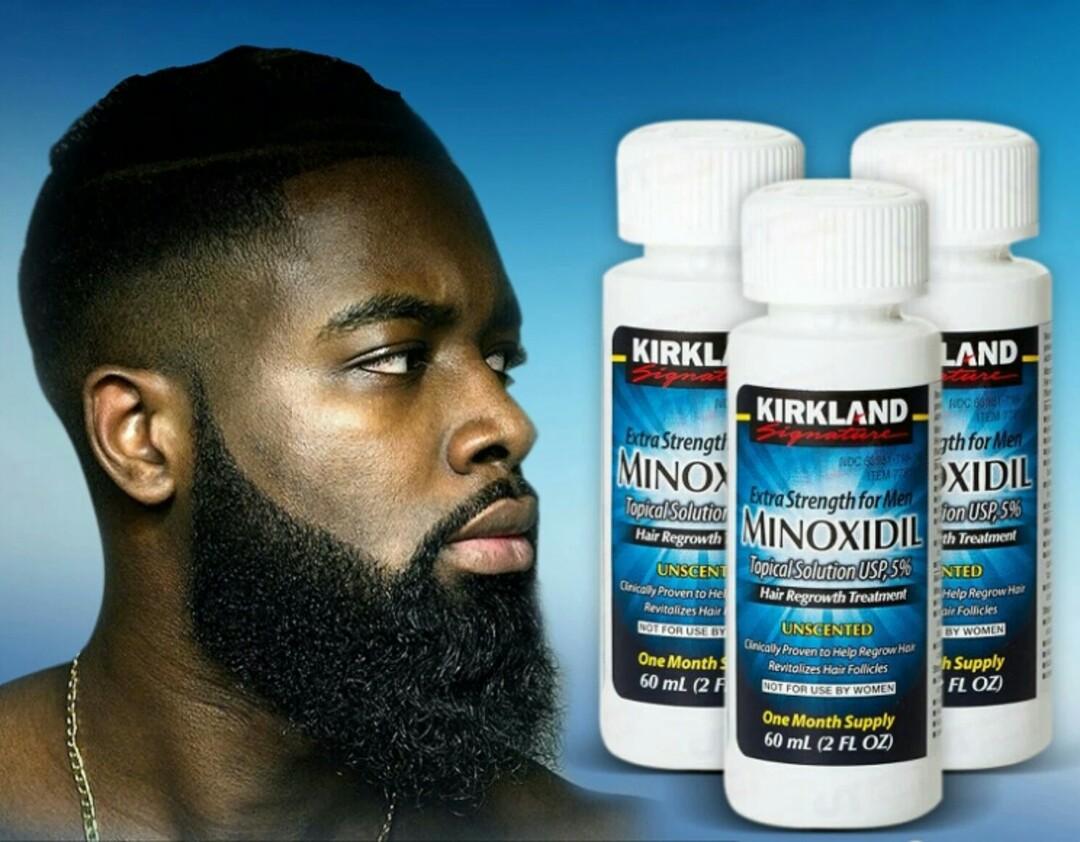
Minoxidil is an over-the-counter medication approved by the FDA to treat hair loss on the scalp, in both men and women. Most people know it as Rogaine. Applying it to the beard is an off-label use: it is the same product, but the FDA approval covers scalp hair, not facial hair. Minoxidil does not cure baldness, and when you stop using it, the new hair usually sheds, which means you have to keep using it to keep the results. Minoxidil was originally developed as a blood pressure medication, and the oral tablet is still prescribed for severe high blood pressure.
Using Minoxidil on your beard? Keep the skin beneath it calm with a non-comedogenic beard oil.
Minoxidil comes with instructions. Read them before you start, and if a doctor prescribed it, use it exactly the way they told you. Apply it only where directed. Putting it on more skin than intended means absorbing more of the drug, and cuts, sunburn, or already-irritated skin can increase absorption too.
If you already use Minoxidil on your scalp, be cautious about adding your beard, since more surface area means more of the drug absorbed. Unlike scalp use, beard use often has an end point: many guys use it until the beard fills in and then stop, though some shedding is common when you do. It usually takes two to three months of daily use to see any change at all.
Most Common Side Effects of Using Minoxidil
Like any medication, Minoxidil can cause side effects. With topical use, the common ones are local, meaning they happen on the skin where you apply it:
- Dry, irritated, or itchy skin beneath the beard
- Flaking that looks a lot like beardruff
- Redness or a rash, often a reaction to the alcohol and propylene glycol in liquid formulas. Foam formulas use less of both and tend to be gentler.
- Breakouts along the beard line
- Temporary shedding in the first few weeks
- Hair growing where you did not apply it, such as the neck or the cheeks above your beard line
These are the ones most guys actually run into, and they are the reason your beard care routine matters more, not less, while you use Minoxidil.
Least Common Side Effects of Using Minoxidil
These side effects point to Minoxidil reaching the bloodstream in larger amounts than usual:
- Dizziness, lightheadedness, or headache
- A fast or irregular heartbeat
- Swelling in the hands, feet, or face, or sudden weight gain from fluid retention
- Chest pain
- Trouble sleeping or unusual tiredness
The Rogaine label says to stop using it and see a doctor if any of these happen. They are uncommon with topical use, but they are not something to wait out.
Rare Side Effects of Using Minoxidil
These are documented mostly with the oral tablet, where the entire dose enters the body. They are rare with topical use, but they are why Minoxidil deserves to be treated as a drug and not a grooming product:
- Fluid building up around the heart (pericardial effusion), which is the reason oral Minoxidil carries an FDA boxed warning
- Low blood pressure and a racing heartbeat
- Nausea, vomiting, or diarrhea
- Rashes beyond the area where it was applied
- Changes in vision
Protecting the Skin Under Your Beard While Using Minoxidil
Most of the trouble men have with Minoxidil on the beard is skin trouble. Liquid formulas are mostly alcohol and propylene glycol, and applied twice a day, they dry the skin out. Dry skin itches, flakes, and breaks out, and a beard growing through irritated skin does not look the way you wanted it to. A few habits make a real difference:
- Let it dry completely before anything else touches the area. Apply Minoxidil as directed, give it time to absorb fully, and apply your beard oil at a different point in the day. Many men apply Minoxidil at night and oil in the morning. Applying oil over wet Minoxidil can interfere with how it absorbs.
- Use a light, non-comedogenic oil. Skin that Minoxidil has already dried out and irritated does not need a heavy oil sitting on top of it. A beard oil for sensitive skin puts the moisture back without clogging pores or adding to the irritation.
- Go unscented if your skin is reactive. If even light scents bother you, choose an unscented oil until your skin settles down.
- Wash with a sulfate-free beard wash. Harsh cleansers strip what little oil the skin has left. A gentle, sulfate-free wash keeps the beard clean without making the dryness worse.
- Consider foam over liquid. Foam formulas contain less alcohol and propylene glycol, and many men find them easier on the skin.
- Patch test, and know when to stop. Try any new product on a small area first. If irritation keeps getting worse, pause the Minoxidil and talk to your doctor.
Where we stand: We do not use Minoxidil, and we do not sell it. Beard Organics was built around caring for the beard you can grow on your own, with clean skin, a light oil, good nutrition, and patience. That is our choice, not a verdict on yours. If you use Minoxidil, we would rather help you do it with calmer skin than lecture you about it.
We have been discussing Minoxidil and its possible side effects, however, these side effects are not meant to scare you or discourage you from using Minoxidil. Most users do not experience the serious ones, and how you react depends on your own health. If you have any medical conditions, it’s best to consult your doctor. If you do notice dryness, itching, or breakouts beneath your beard while using it, switching to a non-comedogenic beard oil can help keep that skin comfortable.
Always remember: A healthy beard starts with a healthy body. Whatever you decide about Minoxidil, good nutrition is the foundation. If your diet has gaps, Beard Vitamins can help fill them.

Beard Vitamins
- Non-GMO & Gluten-Free
- Available as capsules or gummies
- Pairs with your beard oil routine
- Nutrition first, no shortcuts